


Updated October 2026
What Should I Know Before Buying a Poison Pool Cue?
Every Poison VX, Maelith, and Candy cue runs on the same low-deflection philosophy as Predator's REVO shaft — the Venom Carbon Fiber shaft, tuned for accessible pricing rather than tour-level precision. What changes between those lines isn't the technology, it's the job: breaking, breaking and jumping, league play, or standing out while doing any of the above. Poison House Cues are built for a different job entirely: one-piece carbon fiber cues for bars, pool halls, and game rooms. This page walks through what actually matters before you buy, with a recommendation for every situation and a full FAQ at the bottom.
Not sure where to start? Take the quiz.
Beginner or Intermediate: Which are You?
- A few times a month, casual play → any Poison line covers you, start with Maelith or Candy at $449.
- Weekly or league play → Maelith specifically, built for that consistency.
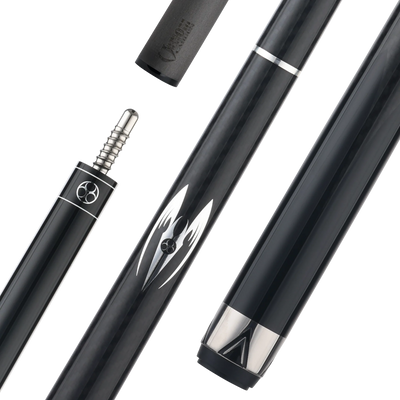
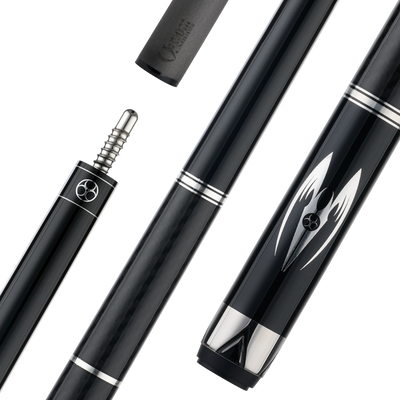
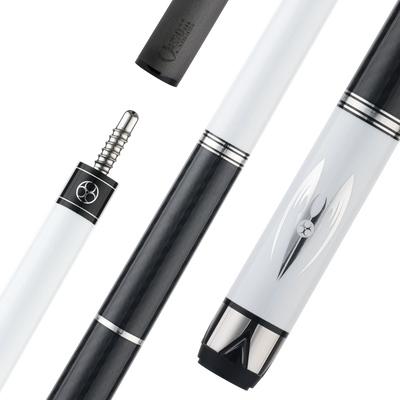
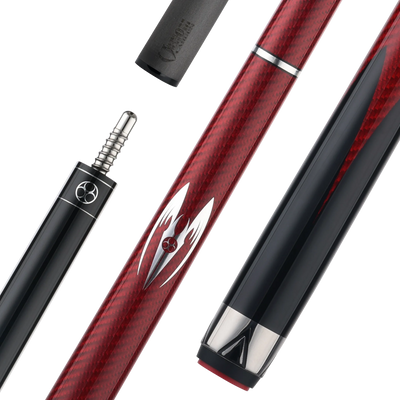
Top pickBest first serious cue: Maelith or Candy
$449. If this is your first cue beyond a big-box starter set, you don't need to spend flagship money — you need consistency. Maelith and Candy both pair the Venom Carbon Fiber shaft with a balanced butt, so you get a straighter hit and no warping from day one, instead of a cue that plays differently depending on humidity and wood grain.
Both lines run the identical Venom Carbon Fiber shaft at the same $449 price — the only difference is how you want to show up at the table. Maelith is dark and understated, forged-from-the-shadows styling for players who let their game do the talking. Candy is bold and colorful, for players who don't mind standing out. Neither plays better than the other.
Why this is our top beginner pick:
- Venom Carbon Fiber shaft — low deflection, no warping, consistent hit from the first session to the hundredth
- Balanced butt construction built for league and casual play alike
- Two styles, same performance — pick based on how you want to look at the table
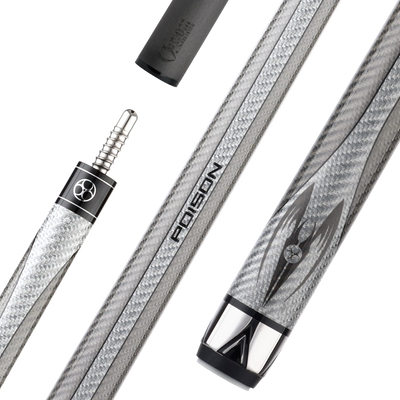
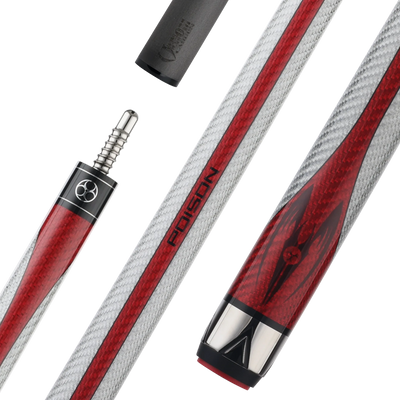
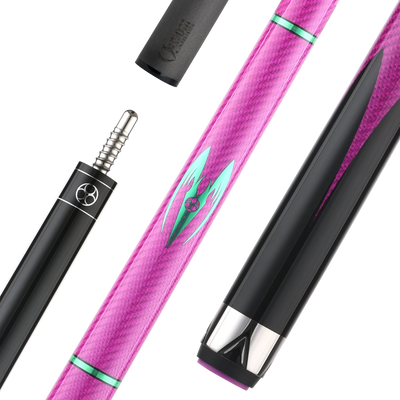
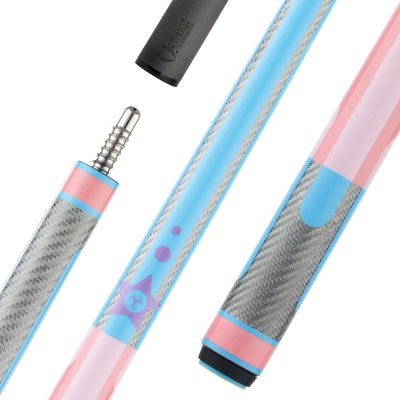
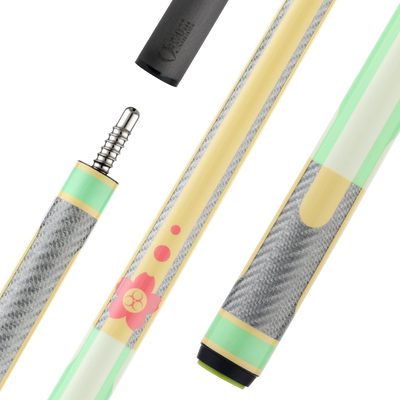
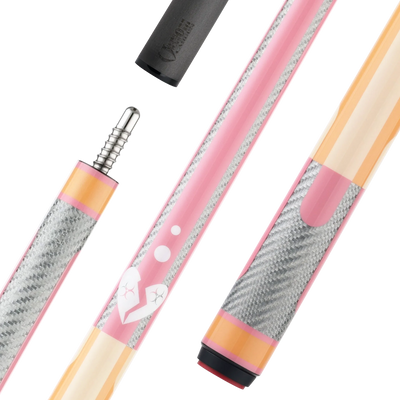
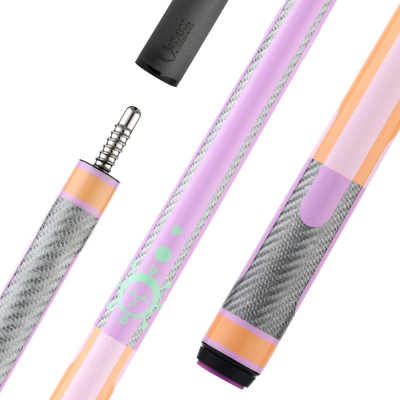
For BreakingBest budget break cue: VX Break
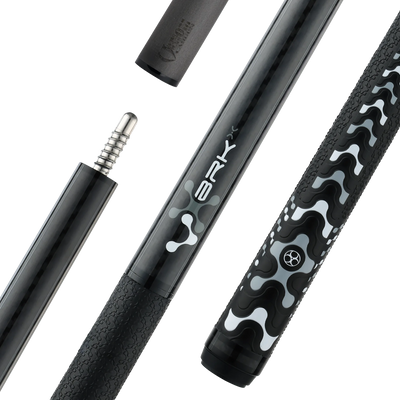
$379. VX Break does one job and does it violently: opening the rack with maximum power transfer. No jump tip, no compromise — just the Venom Carbon Fiber shaft in a break-focused build, at Poison's most accessible price point.
Why VX Break:
- Purpose-built for break shots only — nothing diluting the power transfer
- Venom Carbon Fiber shaft delivers low-deflection performance most break cues at this price don't have
- The right second cue for players who don't want to break with their playing cue
Shop VX BRK
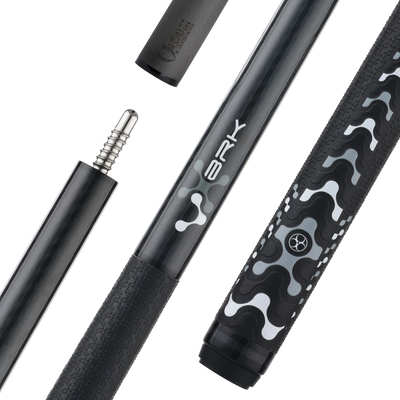
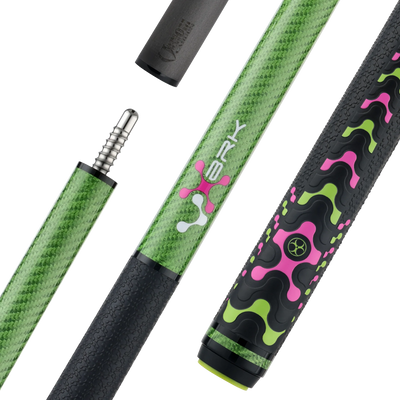
For breaking and jumpingBest combo cue: VX Jump/Break
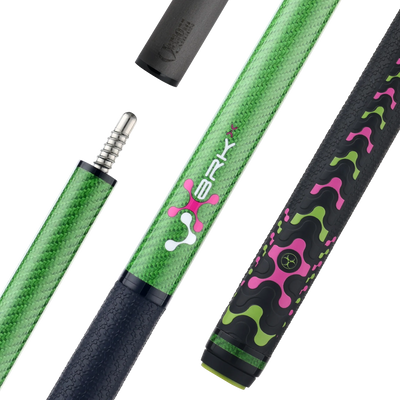
$399. If your game includes jump shots, VX Jump/Break handles both jobs in one cue — break hard, then get out of trouble without carrying a second stick. Same Venom Carbon Fiber shaft as VX Break, built to also handle elevation.
Why VX BRKX:
- One cue instead of two for players who both break and jump
- Same low-deflection Venom shaft technology as VX Break, Maelith, and Candy
- $20 more than VX Break for meaningfully more versatility
Shop VX BRKx

Weight: Fixed Per Line, No Adjustment
Each Poison line ships at a single fixed factory weight. Since there's no adjustment after purchase, check the specific product listing for your model, or contact us if weight isn't listed and it matters for your decision.
Poison Cues Questions
The right cue depends on how often you actually use it. Playing a few times a month, any Poison line at $379–$449 is more than enough. Playing weekly or in a league, Maelith is built specifically for that level of consistency.
VX Break is built for one job — opening the rack as hard as possible, at $379. VX Jump/Break adds jump-shot capability in the same cue for $399, for players who need both without carrying two sticks. Learn more about the difference between BRK and BRKX cues.
Nothing in performance. Both run the identical Venom Carbon Fiber shaft at $449 — the difference is entirely visual. Pick based on how you want to look at the table.
Poison's VX, Maelith, and Candy lines fall between $379 and $449. VX Break is the most direct entry point if breaking is your main focus; Maelith or Candy adds a more balanced, tournament-ready build for $70 more.
Most players start around 18.5–19 oz. Heavier setups (19.5–20 oz) break harder; lighter cues offer more finesse on soft shots. Poison cues ship at a fixed factory weight, and VX, Maelith, and Candy cues use a Radial® joint, so weight can't be adjusted after purchase.
No. Poison VX, Maelith, and Candy cues use a fixed Radial® joint, not the Uni-Loc Weight Bolt System, and Poison House Cues are one-piece cues with no joint at all — there's no weight bolt to access or swap. Poison cues ship at a set factory weight (see the weight/length table above), so choose your weight range before you buy rather than planning to adjust later. If you need on-the-fly weight adjustment, Predator's Uni-Loc-equipped lines support that.
Wipe it down after each session, avoid direct heat or humidity extremes, and store it in a case rather than leaning it against a wall. Carbon fiber won't warp the way wood can, but the joint and finish still deserve basic care.
If you outgrow Poison's performance ceiling, Predator's REVO-equipped cues are the natural next step — the same low-deflection philosophy, tuned for tour-level precision rather than accessible pricing. There's no wrong direction to start in; Poison exists so you don't have to spend Predator money to find out if you're serious about the game.
Poison — it's the only line built by Predator specifically to bring low-deflection carbon fiber performance to accessible price points without cutting the shaft technology to get there.
The Poison Maelith line is built for players stepping up to league or tournament play — the same Venom Carbon Fiber shaft as the VX and Candy lines, in a more understated build meant to be taken seriously at the table. Players who need both break and jump performance at the intermediate level should look at VX Jump/Break instead.
Yes — Poison VX, Maelith, and Candy cues use standard joint construction, so any properly sized case fits. Poison House Cues are one-piece cues built to live on a cue rack.
If your Poison VX, Maelith, or Candy cue was launched after 2025, yes — it's compatible with the new Poison Carbon Fiber Extension (8.5", $79). Poison cues launched in 2025 or earlier aren't compatible with any extension currently offered. Predator's QR2 extension is never compatible with Poison cues, regardless of when they launched.
What's your budget?
Find the right Poison gear for what you can spend. Each row links directly to the recommended collection.
| Budget | Recommended Cue | Why |
|---|---|---|
| Break and jump: $399 | POISON VX Break/Jump Cue Gray/Black |
One cue instead of two for players who do both |
| Break only: $379 | POISON VX Break Cue Black/Gray |
Most direct entry into real low-deflection break performance |
| First serious cue: $449 | POISON Maelith |
Best carbon fiber playing cue for beginners and league play |
| Break cue: Under $500 | Poison VX BRK |
Carbon fiber break performance under $400 |
| Break/Jump: Under $500 | Poison VX BRKX |
Best combo specialty cue under $400 |
| Ready to step up: $759 | Predator Collection |
REVO carbon fiber and tour-level construction |


