


Updated October 2026
The Best Carbon Fiber Pool Cues: A Player's Guide from the Brand the Pros Use
The REVO carbon fiber shaft is the most-played carbon fiber shaft in professional pool, with the most world championship titles won over the last decade. It has led the carbon revolution in pool since its introduction in 2016. If you want the best carbon fiber pool cue available today, a Blak or P3 series cue, alongside our BK Rush break cue paired with a REVO carbon fiber shaft is what the majority of top-ranked professional players are using right now. There are also excellent Poison cues with Venom Carbon shaft alternatives at lower price points.
The best pool cuesWhy carbon fiber pool cues are the standard now
For 200 years, the pool cue shaft was made of Maple or Ash for snooker cues. Quality Maple, well-shaped and well-cared-for, plays beautifully, but it has problems no maple cuemaker can fully solve, being that wood absorbs moisture. Wood expands and contracts with temperature. Wood dents from minor impacts. Wood warps. Two cues from the same tree, made by the same craftsman in the same week, will never play exactly identically.
Carbon fiber doesn't have those problems. A carbon fiber pool cue shaft is built from aerospace-grade carbon fiber composite, the same family of materials used in F1 chassis and modern aircraft, which doesn't warp. It doesn't react to humidity, it doesn't dent, and it travels well. The carbon shaft you bought last year plays the same today as the day you unboxed it, and a replacement plays identically to the original.
The consistency and durability are the real benefits. Performance gets the headlines, but consistency is what wins games. And durability saves you money over time. When your cue plays predictably every time, you start trusting your aim and building confidence.
Accurate Spin ShotsThe performance advantage: low-deflection
Carbon fiber's other advantage is technical. A pool cue's deflection, sometimes called "squirt", is the angle by which the cue ball departs from your aim line when you strike it with side spin. The more deflection a shaft produces, the more you have to compensate your aim to hit your target when applying English. High-deflection shafts make spin shots harder to predict because you're constantly adjusting for an angle that varies with how much spin you apply, how hard you hit, and where on the cue ball you make contact.
Lower deflection means a straighter line, which makes your position play much more accessible and helps you progress faster. The aerospace-grade carbon fiber composite in a REVO shaft combines high stiffness with very low front-end mass is the recipe for the lowest achievable deflection. This optimal performance is obtained with Predator's patented front-end Vault Plate construction (Patent US9814963B2). The advantage is less compensation, more pocketed balls, and less mental load while playing. A low-deflection carbon fiber cue is easier to play accurately, especially for shots requiring spin. Learn more about why low-deflection is better for your game.
Shop the top picks for low-deflection Pool cues
Shopping SpecificationsWhat to look for when shopping for a carbon fiber pool cue
Here are some of the key things to pay attention to when comparing cues:
1. Tip diameter
The tip diameter is the most important specification after the shaft material. Carbon fiber shafts primarily come in 11.8 mm, 12.4 mm, and 12.9 mm diameters at the tip.
- Smaller tips (11.8 mm) give the most precise tip placement and are preferred by some advanced players who use heavy spin. They, however, require a consistent stroke to obtain the desired cue ball position shot after shot.
- Larger tips (12.9 mm) are more forgiving because they generate less spin and make position placement more easily consistent.
- 12.4 mm is the most popular middle-ground choice, making it more versatile.
Paired with our medium hardness Victory Tip, our REVO carbon fiber shafts deliver optimal English or draw.
2. Joint compatibility
The shaft must fit the butt. Common joint pin types include our most popular Uni-Loc® quick-release and Radial® joints, as well as traditional 5/16×14, 5/16×18, and 3/8×10 joint threads. If you already own a butt you love, your shaft choice is limited to what fits it. See our joint compatibility guide if you're shopping for a different cue brand and want to make sure the joint thread matches.
3. Feel and feedback
"Feel" is subjective and impossible to fully describe in writing. You have to hit balls with a cue to know how it plays for you. That said, carbon fiber shafts vary in feedback character. The REVO shaft feels firm and delivers crisp feedback, confident without being harsh, which is why it's the most-used carbon fiber shaft in professional pool.
4. Price
Carbon fiber pool cues range from around $400 for an entry-level complete cue to well over $3,000 for a signature cue. Generally:
- $400–$500: Entry-level Poison carbon fiber shaft cue. Solid performance, simple aesthetics. A clear upgrade from a starter maple cue.
- $900–$1,500: Mid-tier. Premium materials, improved balance, professional-grade shaft included.
- $1,500+: Premium and limited edition cues. Higher-grade hardwoods or veneers, more detailed inlays, often paired with a REVO carbon fiber shaft.
Top PicksOur top carbon fiber pool cue picks for 2026
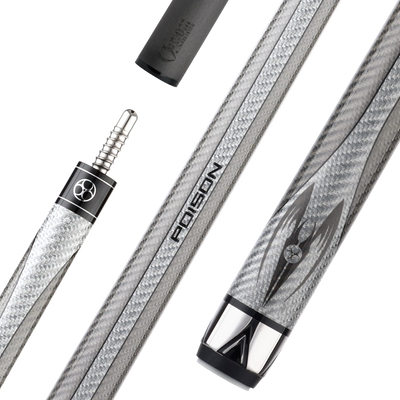
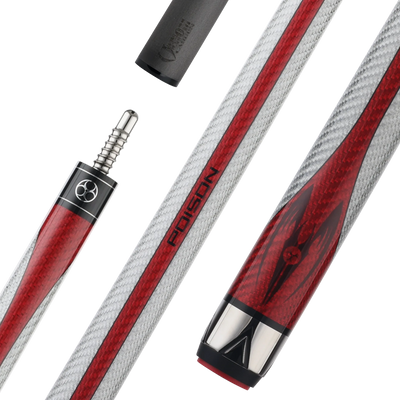
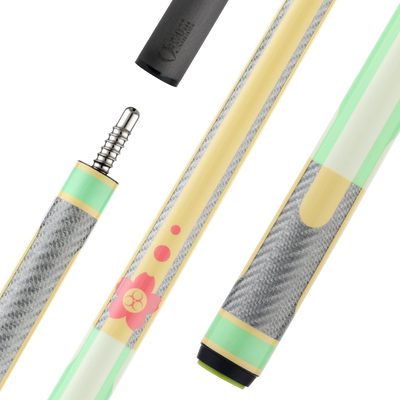
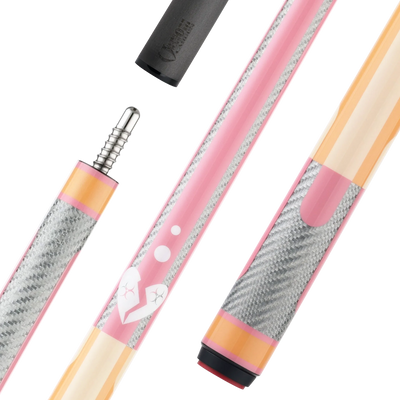
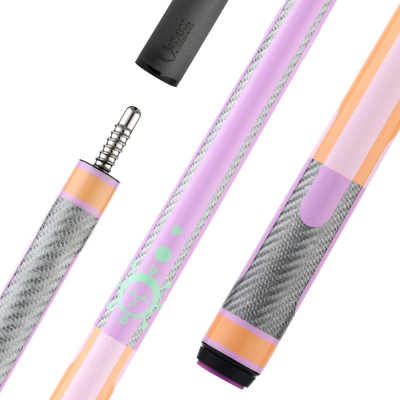
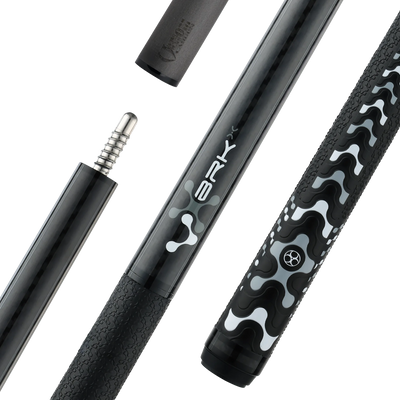
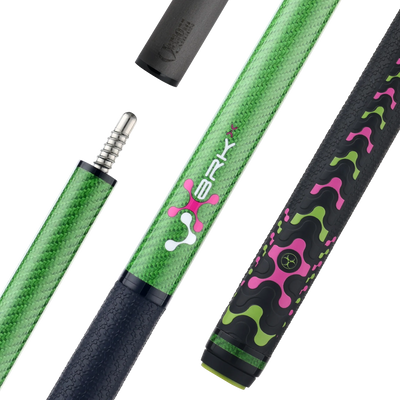
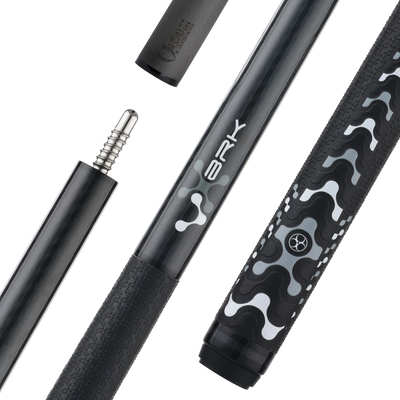
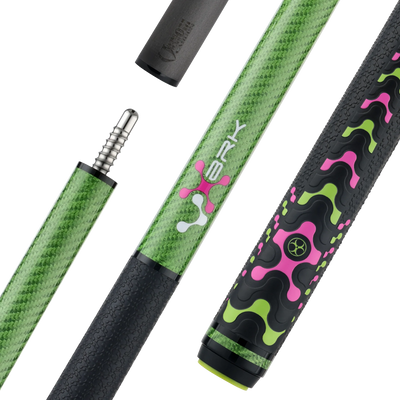
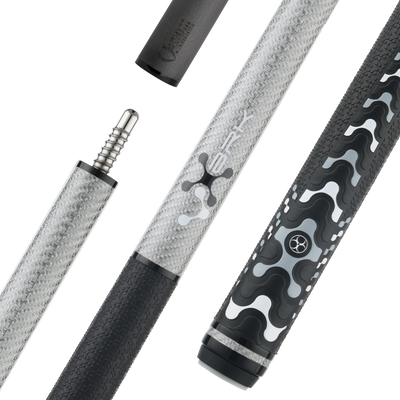
Best entry-level carbon fiber pool cue: POISON Maelith
$449. The Maelith is the most accessible carbon fiber cue we make — a complete cue with a Venom carbon fiber shaft and Radial joint pin. Low-deflection technology in a cue built for players buying their first serious cue.
POISON is Predator's sister brand, designed to bring carbon fiber performance to players who aren't ready to spend on high-end cues.
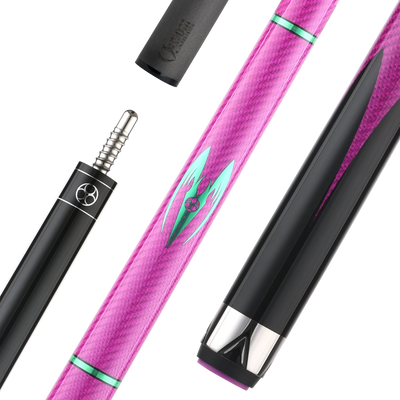
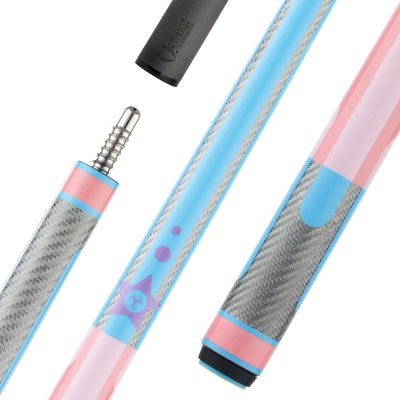
If you want the same shaft technology in different colors, check the POISON Candy collection for sweet styles with the same Venom carbon shaft.
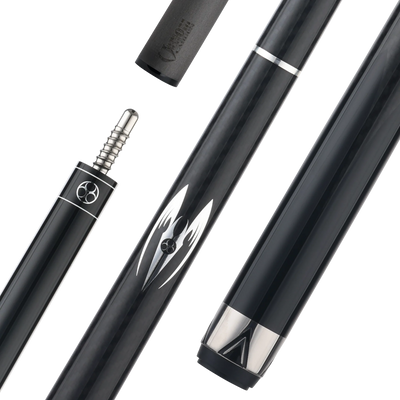
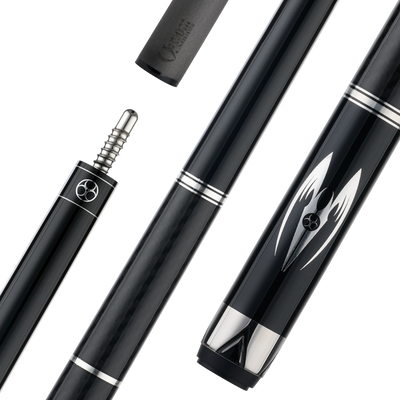
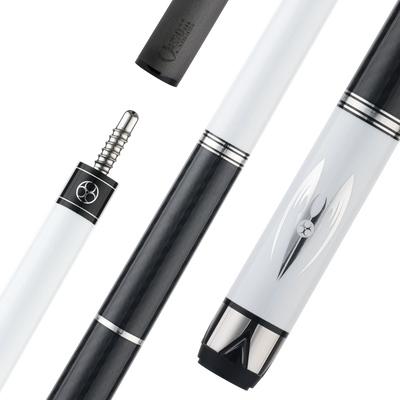
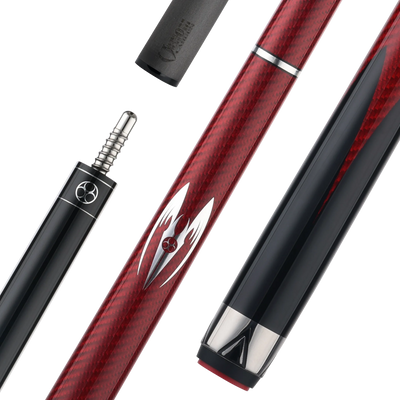

Best mid-range carbon fiber pool cue: Predator 10K
$1,009–$1,298 depending on shaft choice.
The 10K features a longer wrap than most other cues, with a forward-balanced design suited to taller players who hold the cue far back, or players who take a lot of reach shots. The extended Leather Luxe wrap gives the grip area a consistent feel through the butt cap. Paired with a REVO 12.4mm shaft, it delivers professional-grade performance, making it the most common second-cue upgrade for players getting serious.
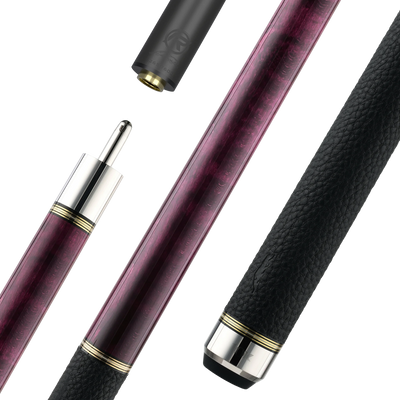
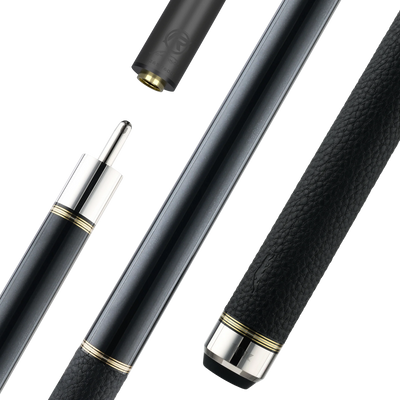
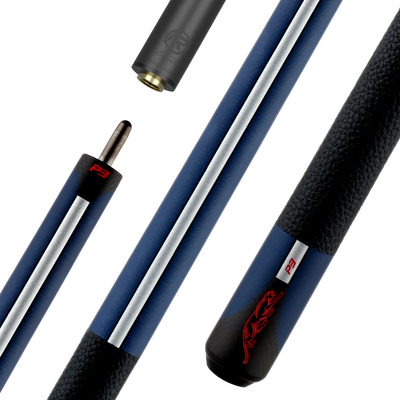
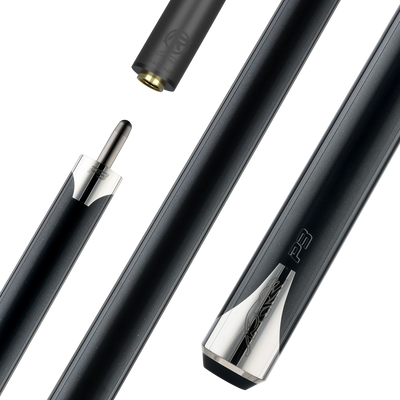
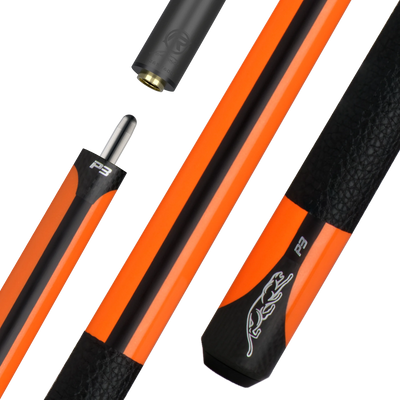
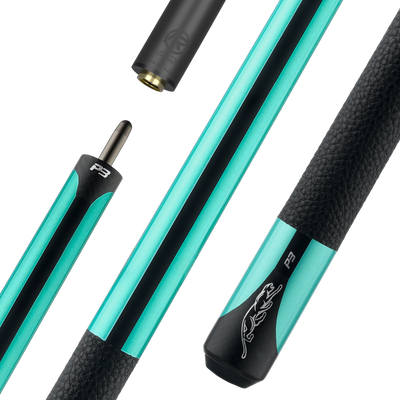
Best mid-range carbon fiber pool cue: Predator P3
$999–$1,841 depending on shaft choice. The P3 is the most technologically advanced cue in this range, built around a 30-Piece construction and the Uni-Loc® Weight Cartridge System. P3 is the cue for players who want perfect feedback.
The P3 is one of our most popular models with clean lines and a modern build. It is used by many of our Pro Team members.
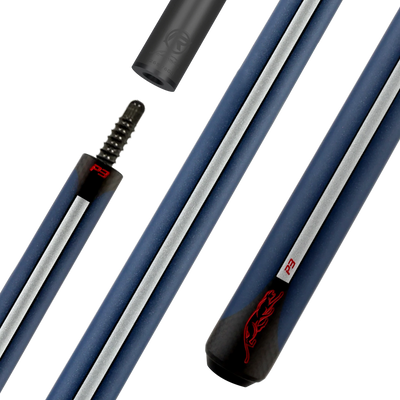
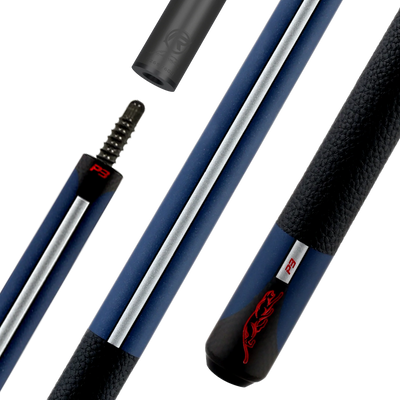

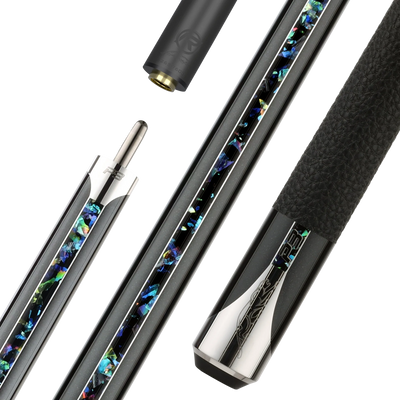
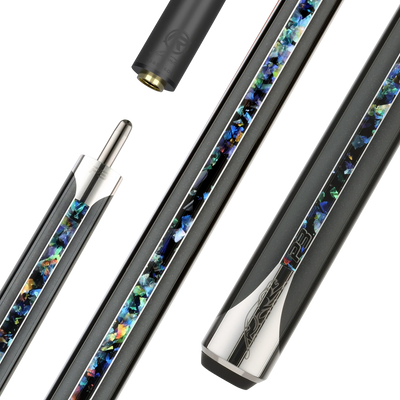

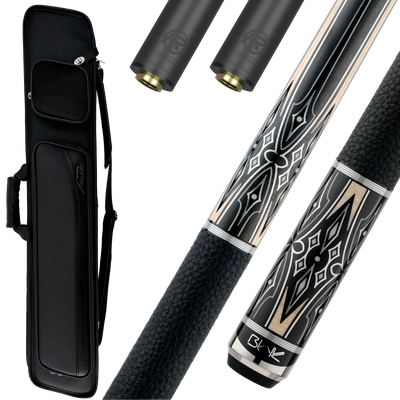
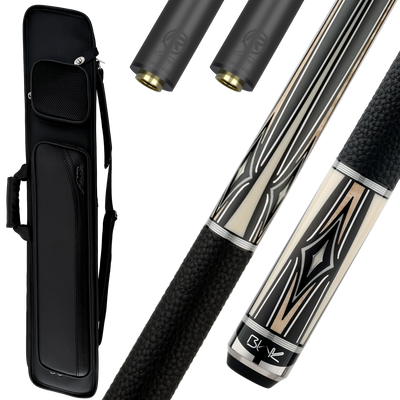
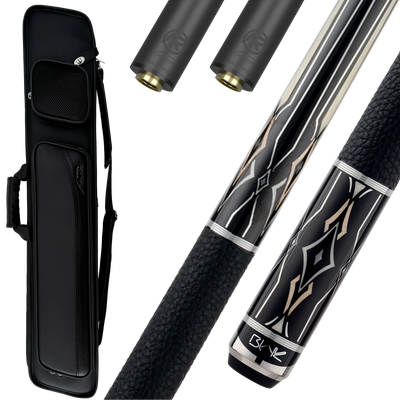
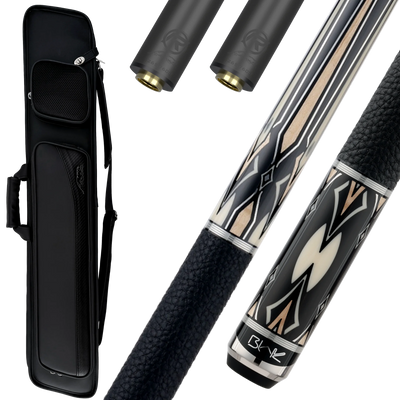
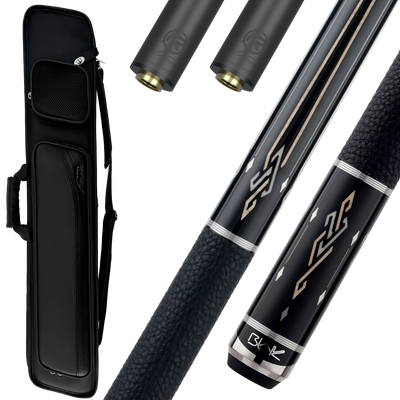
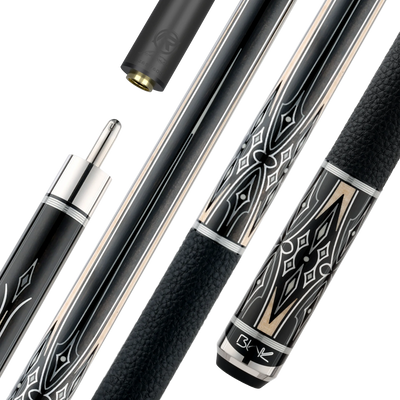
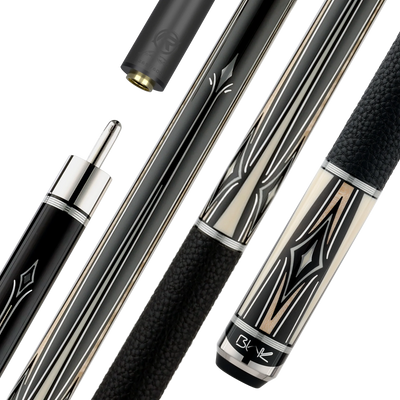
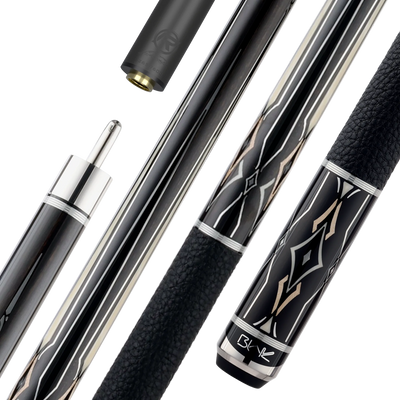
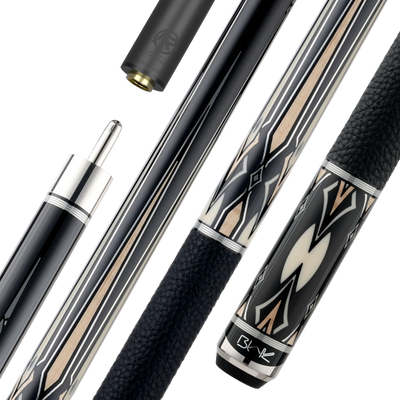
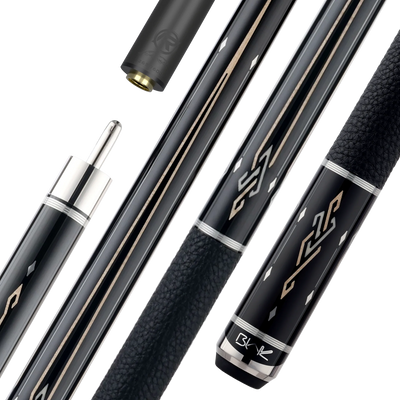
Best carbon fiber pool cue: Predator Blak5
$2,809–$3,510. The Blak5 is handcrafted in genuine ebony, with precision metal ringwork and inlay. It's the fifth generation of the Blak family, and the most refined: tighter tolerances, more intricate inlays, and the balance our Pro Team specifically requests for tournament play.
What you're paying for over the P3 isn't more technology — it's materials and craftsmanship. Same REVO shaft performance, but a butt that's built like a high-end instrument.
Pair it with a REVO 12.4mm for the most popular configuration, or with a Centro Hybrid for a wood-shaft feel with low-deflection performance.
Best limited-edition carbon fiber pool cue: TrueSplice 16
$1,486–$1,737. The TrueSplice 16 (TS16) uses a proven traditional splicing construction method with modern phenolic enhancements: hand-spliced points, in which the butt is built from interlocking pieces of wood rather than inlaid into a single blank. The result is sharper, cleaner point lines and a butt that is structural, not surface-level.
Premium ebony, hand-selected veneers, Radial® joint. Each run is limited and never reproduced.
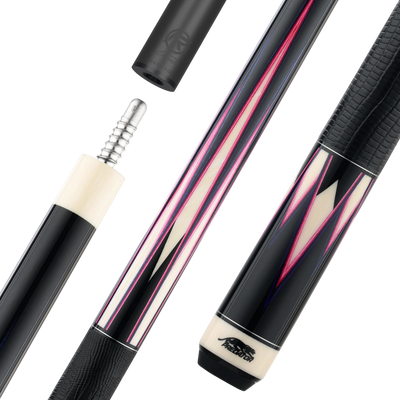
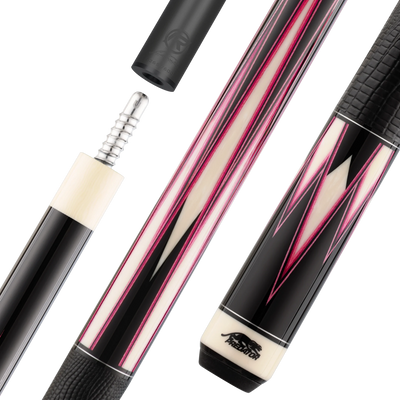
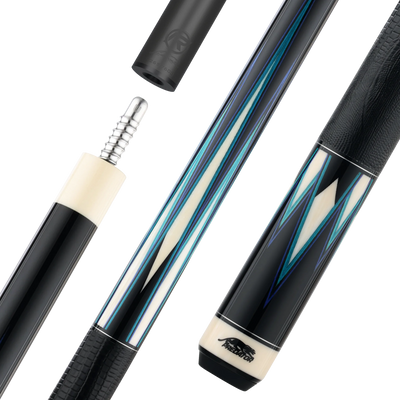
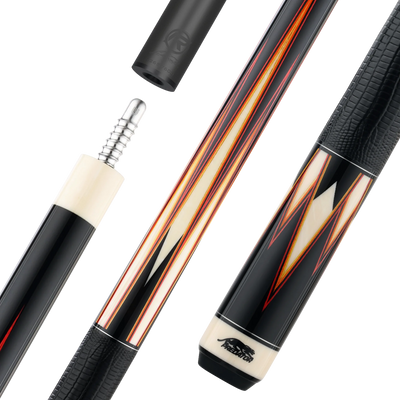
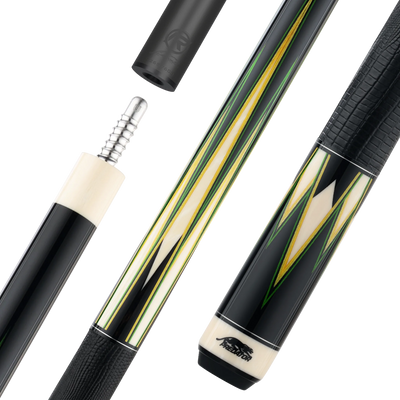
What's your budget?
Find the right cue for what you can spend. Each row links directly to a recommended product. Cue prices include the lowest shaft material.
| BUDGET | RECOMMENDED CUE | WHY |
|---|---|---|
| Under $500 | POISON Maelith |
Best carbon fiber under $500 |
| $1,000-$1,300 | Predator 10K |
Premium look, premium hit, accessible price |
| $1,000–$1,500 | Predator P3 Series |
Premium build without the premium price |
| $1,500–$1,800 | Predator TrueSplice 16 (TS16) |
Best overall — pro-grade, customizable |
| $2,500+ | Predator Blak5 Series |
Top-tier competition and collector pieces |
Compare products
Compare specs, prices, and features side-by-side to find the right fit.
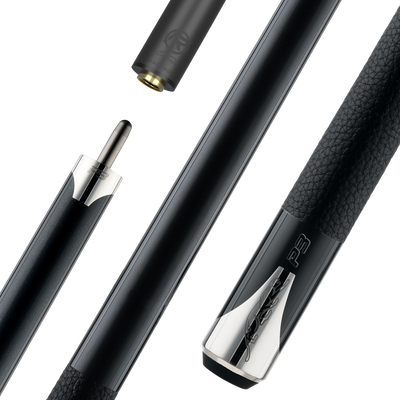
| Spec | Best overallPredator Blak5 1 Pool CueTop pick | Predator P3 Black Pool Cue - Leather Luxe WrapMid-range pick | Poison Maelith Pool Cue with Carbon Fiber Shaft - Black/Black - No WrapBeginner-level pick |
|---|---|---|---|
| Product |
|
|
|
| Price | From $2,450.00 | From $720.00 | $349.00 |
| Tip Diameter | 11.8mm | 12.4mm | 12.9mm | 11.8mm | 12.4mm | 12.9mm | 12.4mm |
| Joint Type | Uni-Loc | Uni-Loc | Radial |
| Weight | 19 oz | 19 oz | 19 oz |
| Wrap | Leather Luxe | No Wrap | Leather Luxe | No Wrap |
| Carbon Fiber Shaft | ✓ | ✓ | ✓ |
| Best For | Advanced | Intermediate | Beginners |
| Shop Now | Shop Now | Shop Now |
← Swipe to compare more →
Pool Cue Materials Questions
For most serious players, the Predator P3 paired with a REVO 12.4mm shaft is the best carbon fiber pool cue available, priced between $1,000 and $1,500. It combines the Uni-Loc® Weight Cartridge System for adjustable balance with the most-played carbon fiber shaft in professional pool. Players on a tighter budget should consider the POISON Maelith at $449, which uses low-deflection carbon fiber technology in an entry-level build. Top-level competitors and collectors typically choose the Predator BlaK5 ($2,800–$3,510).
Yes, for most players. Carbon fiber pool cue shafts do not warp, do not absorb moisture, and play identically in any climate. They also produce significantly lower deflection than traditional maple shafts, which makes shots with English (side spin) more predictable. The trade-off is price and feel: carbon fiber costs more than basic maple and has a firm feedback. For players who travel, compete, or want consistent performance over years of use, carbon fiber is worth the investment
Carbon fiber pool cues range from around $400 to over $3,000. Entry-level complete cues like the POISON Maelith start at $449. Mid-range cues like the Predator 10K and P3 fall between $999 and $1,841. Premium and limited-edition cues like the Predator BlaK5 and TrueSplice 16 range from $1,486 to $3,510. The shaft alone, such as a REVO carbon fiber shaft, typically accounts for $500 to $600 of the total price on higher-tier cues.
Carbon fiber shafts are built from aerospace-grade composite that does not warp, absorb moisture, or react to temperature changes. They produce very low deflection and play identically over time. Maple shafts are made from wood, which has natural variation between pieces, can warp, dent and reacts to humidity. A premium maple shaft like the Predator 314-3 still delivers excellent low-deflection performance, but carbon fiber offers greater consistency and durability across climates and years of use.
12.4mm is the most popular tip diameter for carbon fiber pool cues and is used by most players on the Predator Pro Team. Smaller tips (11.8mm) give the most precise tip placement and are preferred by advanced players who apply heavy spin. Larger tips (12.9mm) are more forgiving and therefore better suited for beginning and intermediate players. Players new to carbon fiber typically do best starting with 12.4mm or 12.9mm.
A carbon fiber pool cue shaft can last a lifetime with normal use. Unlike maple, carbon fiber does not warp, crack from humidity changes, or degrade with age. The tip will wear and require periodic replacement, as with any cue, but the shaft itself maintains its original performance indefinitely. This durability is one of the main reasons professional players choose carbon fiber for competition and travel.
Deflection, sometimes called squirt, is the angle the cue ball departs from the aim line when struck with side spin. A low-deflection shaft minimizes this angle, making spin shots more predictable and easier to aim. Low deflection is achieved by reducing front-end mass and increasing shaft stiffness. Carbon fiber shafts like the Predator REVO produce the lowest deflection available because the composite combines high stiffness with very low end mass.
The POISON Maelith and Candy lines are the best entry-level carbon fiber pool cue at $449. It is a complete cue with a Venom carbon fiber shaft and Radial® joint pin, using low-deflection technology engineered by Predator. It is built for players upgrading from a starter maple cue who want carbon fiber performance without the premium price.
Carbon fiber pool cue shafts require very little maintenance. They do not need to be burnished, sealed, or conditioned like maple shafts. Routine care involves wiping the shaft clean with a microfiber cloth after play and replacing the tip when it wears down. The butt of the cue, depending on materials, may require occasional cleaning and care for the wrap, which can be a wear item depending on the type of wrap.
The Predator REVO is the most-played carbon fiber shaft in professional pool led the adoption of carbon fiber technology as it became mainstream in the sport. It is used by more top-ranked professional players and has won more World Championship titles than any other shaft over the last decade. REVO is available in 11.8mm, 12.4mm, and 12.9mm tip diameters and pairs with Predator cue butts as well as cues from other manufacturers using compatible joint pins.


