


Updated November 2026
Which Joint Does My Predator Or Poison Cue Have?
Predator has used 4 joint types.

Most Predator cues made since 2002 use the Uni-Loc® Quick-Release joint: one-turn on, one-turn off. Some Predator limited edition cues use the Uni-Loc® Radial® joint.

Select Predator limited edition cues feature the Uni-Loc® Radial® joint. Current Poison cues with a Venom carbon shaft use the Uni-Loc® Radial® joint. Most Poison cues made before 2025 use the Uni-Loc Bullet joint (listed below as the Uni-Loc Bullet Pin), which is no longer manufactured. For help with a Bullet-joint cue, contact support.

Most Predator cues made before 2002 use a 5/16x14 joint.

Only a few Sneaky Pete cues with 4 green points, made before 2000, use a 5/16x18 joint.

5280
3/8x10 Thread Pin

ACTION
5/16x18 Thread Pin

AE
5/16x14 Thread Pin
BALABUSKA
5/16x14 Thread Pin
BLACK BOAR
5/16x14 Thread Pin
BLACK, RICHARD
5/16x18 Thread Pin
BLACK, RICHARD
3/8x10 Thread Pin
BUSS, JIM
5/16x14 Thread Pin

CAPONE
Uni-Loc Radial® Pin

DISHAW
Uni-Loc® Quick-Release Pin
DISHAW
Uni-Loc Radial® Pin
DP
Uni-Loc® Quick-Release Pin
DP
Uni-Loc Radial® Pin
DREXLER, PAUL
Uni-Loc® Quick-Release Pin
DREXLER, PAUL
Uni-Loc Radial® Pin
DUFFERIN
5/16x18 Thread Pin
ESPIRITU
5/16x14 Thread Pin
ESPIRITU
Uni-Loc Radial® Pin
FALCON
5/16x14 Thread Pin
FALCON
Uni-Loc® Quick-Release Pin
FALCON
3/8x10 Thread Pin
GINACUE
5/16x18 Thread Pin
HELMSTETTER
5/16x14 Thread Pin
HELMSTETTER
5/16x18 Thread Pin
HUEBLER
5/16x18 Thread Pin
HUNTER
3/8x10 Thread Pin
J&J
5/16x18 Thread Pin
JACOBY
5/16x14 Thread Pin
JACOBY
Uni-Loc Radial® Pin
JACOBY
3/8x10 Thread Pin
JOSEY
Uni-Loc Radial® Pin
JOSS
5/16x14 Thread Pin
JOSS WEST
Uni-Loc Radial® Pin
JOSS WEST
Uni-Loc® Quick-Release Pin
JOSS WEST
3/8x10 Thread Pin
JOSS WEST
5/16x14 Thread Pin
JUDD
5/16x18 Thread Pin
JUDD
3/8x10 Thread Pin
LAMBROS
3/8x10 Thread Pin
LUCASI
Uni-Loc® Quick-Release Pin - Standard
LUCASI
Uni-Loc Radial® Pin - Select Models
McDANIELS
5/16x14 Thread Pin
McDERMOTT
3/8x10 Thread Pin
McWORTER
3/8x10 Thread Pin
MEUCCI
5/16x18 Thread Pin
MOTTEY, PAUL
5/16x14 Thread Pin
NITTI
Uni-Loc® Quick-Release Pin
NITTI
Uni-Loc Radial® Pin
NOVA
5/16x14 Thread Pin
OB CUES
3/8x10 Thread Pin
OB CUES
5/16x14 Thread Pin
OLIVIER
3/8x10 Thread Pin
ORCHID
5/16x18 Thread Pin
PALMER
5/16x18 Thread Pin
PECHAUER
5/16x14 Thread Pin
PFD
Uni-Loc® Quick-Release Pin
PFD
Uni-Loc Radial® Pin
PHILLIPI
5/16x14 Thread Pin
PLAYERS
5/16x18 Thread Pin

POISON
Uni-Loc Bullet Pin - No Longer Manufactured
POISON
Uni-Loc Radial® Pin
PRATHER
5/16x14 Thread Pin
PREDATOR (BEFORE 2002)
5/16x14 Thread Pin
PREDATOR (BEFORE 2002)
5/16x18 Thread Pin - Only a Few Sneaky Pete Cues With 4 Green Points, Made Before 2000
PREDATOR (AFTER 2002)
Uni-Loc® Quick-Release Pin
PREDATOR (AFTER 2002)
Uni-Loc Radial® Pin - Select Limited Editions
RAGE
5/16x18 Thread Pin
SAMSARA
Uni-Loc® Quick-Release Pin
SAMSARA
Uni-Loc Radial® Pin
SCHON
5/16x14 Thread Pin
SCRUGGS
5/16x14 Thread Pin
STEALTH
5/16x18 Thread Pin
STERLING
5/16x18 Thread Pin
TAD
5/16x18 Thread Pin
TIGER
Uni-Loc Radial® Pin

VARNER
5/16x18 Thread Pin
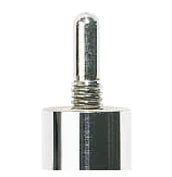
VIKING
Viking Quick Release Pin (Modified 5/16x18) - Fits Predator 5/16x18 Shafts Once A Cue Repair Technician Slightly Enlarges The Threads
How to Identify a Threaded Joint Pin
Joint pin threads can often be measured by diameter and number of threads per inch. A 5/16x14 pin is 5/16" wide with 14 threads per inch.

McDermott and many custom cue makers, some of which use a modified 3/8x10.

Predator before 2002, Schon, Joss and others.

Meucci and many beginner or intermediate cues.
Joint Types Questions
Find your cue's manufacturer in the list above to see its joint type and matching Predator shafts. If your brand isn't listed, joint pin threads can often be measured by diameter and number of threads per inch. You can also contact us with a photo of your joint pin and we'll help identify it.
Pool cues use a range of joint types depending on the manufacturer, including threaded pins (5/16x14, 5/16x18, 3/8x10) and Uni-Loc® joints. Uni-Loc joints are currently made in two variants: Quick-Release and Radial. The earlier Uni-Loc Bullet joint is no longer manufactured.
The Uni-Loc® Radial joint is a threaded, 7-thread pin nestled directly into the cue butt. It takes a bit longer to join and unjoin than a Quick-Release joint, but it requires less frequent maintenance.
Joint pin threads can often be measured by diameter and number of threads per inch. A 5/16x14 pin is 5/16" in diameter with 14 threads per inch. Uni-Loc® joints are identified by name rather than measurement. If you can't measure the pin, find your cue's brand in the list above or contact us with a photo of the pin.
Quick-Release joints use a smooth pin and go one-turn on, one-turn off, making them the faster option. Radial joints use a threaded pin that takes more time to join and unjoin but needs less frequent maintenance.
Only between cues with the same joint type. A shaft fits when its joint matches your cue's pin and the joint-end diameter lines up. All Predator shafts measure .839" to .842" at the joint. Find your cue's brand above to see which Predator shafts fit.
Most Predator cues made since 2002 use the Uni-Loc® Quick-Release joint, and some Predator limited edition cues use Radial®. Most Predator cues made before 2002 use 5/16x14. Only a few Sneaky Pete cues with 4 green points, made before 2000, use 5/16x18.
Yes, if it's a newer Poison cue with a Venom carbon shaft. These use the Radial® joint, and Radial shafts are available. Most Poison cues made before 2025 use the Uni-Loc Bullet joint, which is no longer manufactured. For help with a Bullet-joint cue, contact support.
Yes. Predator makes 3/8x10 shafts for McDermott, 5/16x18 for Meucci and 5/16x14 for Schon. Choose the shaft that matches your cue's joint.
Viking's Quick Release is a modified 5/16x18 joint. A Predator 5/16x18 shaft usually needs its threads slightly enlarged by a cue repair technician to fit.


